
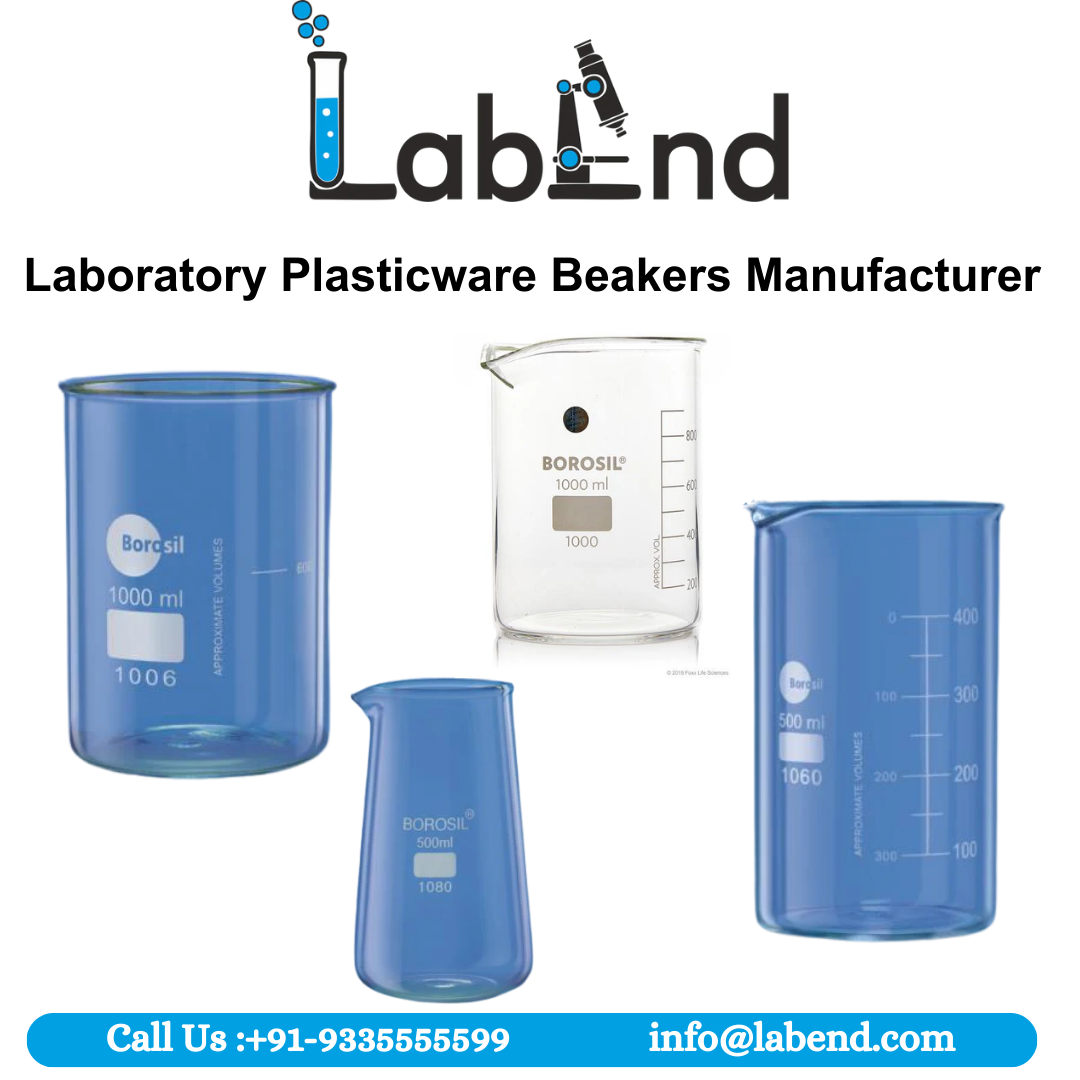
Laboratory Plasticware Beakers Manufacturer
In the world of scientific research, the equipment used for measuring and mixing is just as vital as the chemicals themselves. While glass has historically been the standard, the modern laboratory is increasingly turning toward high-performance polymers for safety, durability, and cost-efficiency. As a leading Laboratory Plasticware Beakers Manufacturer, we have witnessed this shift firsthand. A beaker is perhaps the most frequently handled item in any lab, and its quality directly impacts the safety of the technician and the accuracy of the experiment.
India has become a global center for the production of scientific plasticware, blending advanced polymer chemistry with precision molding. For institutions looking to upgrade their inventory, understanding the engineering behind these vessels is the first step toward a more efficient laboratory environment.
The Advantages of Plastic Over Glass
The primary reason labs are switching to plastic is safety. Glass beakers are prone to shattering, which can lead to hazardous chemical spills and injuries. As a specialized Laboratory Plasticware Beakers Manufacturer, we utilize materials like Polypropylene (PP) and Polymethylpentene (PMP) to create vessels that are virtually unbreakable.
Beyond safety, plastic beakers are significantly lighter than glass, making them easier to handle in large volumes. They are also quieter in a busy lab environment and often come at a lower price point, allowing research departments to stretch their budgets further without compromising on the quality of their daily consumables.
Material Science: The Foundation of Quality
A reputable Laboratory Plasticware Beakers Manufacturer does not just use any plastic; we use medical-grade, virgin resins. The choice of material dictates how the beaker will perform under stress:
-
Polypropylene (PP): This is the workhorse of the lab. It is translucent, has excellent chemical resistance to acids and bases, and is autoclavable at 121°C.
-
Polymethylpentene (PMP): Known for its "crystal clear" transparency, PMP offers the clarity of glass with the durability of plastic. It has a higher melting point and excellent chemical resistance, making it ideal for high-temperature applications.
-
High-Density Polyethylene (HDPE): Used primarily for cold storage and handling low-temperature liquids where rigidity is less important than impact strength.
Engineering Precision: The Manufacturing Process
The creation of a graduated beaker is a complex process that requires high-tech infrastructure. As a dedicated Laboratory Plasticware Beakers Manufacturer, our production line involves several critical stages:
1. High-Precision Injection Molding
The liquid polymer is injected into multi-cavity molds under immense pressure. The design of these molds is crucial; they must ensure uniform wall thickness to prevent "hot spots" or structural weak points. This uniformity ensures that when you heat a liquid in a PP beaker, the heat is distributed evenly.
2. Graduation Accuracy
One of the most important features of a beaker is its graduation marks. We use advanced molding techniques to create raised graduations that will never rub off, even after years of cleaning with harsh detergents. While beakers are generally used for approximate volume measurement, our manufacturing tolerances ensure that these markings are as accurate as possible for non-volumetric ware.
3. Surface Tension and Pouring Spouts
A poorly designed beaker will drip or cause liquid to run down its side. Our engineering team focuses on the geometry of the pouring spout. By refining the lip's edge, we ensure a clean, drip-free pour every time, which is essential when handling corrosive or expensive reagents.
Catering to Diverse Industrial Applications
The demand for quality plasticware extends far beyond chemistry labs. As a versatile Laboratory Plasticware Beakers Manufacturer, we serve multiple sectors:
-
Pharmaceutical R&D: Where purity is paramount, and beakers must be free from any leachable additives that could interfere with drug formulation.
-
Food and Beverage: Where beakers are used for quality testing and must comply with food-safety standards.
-
Education: Where students require rugged equipment that can withstand the "bumps and bruises" of a classroom setting.
-
Agriculture: For mixing fertilizers and pesticides, where the chemical resistance of Polypropylene is a major advantage.
Sustainability: The Circular Economy of Lab Plastic
There is a common misconception that plastic is always bad for the environment. However, high-quality lab plasticware is designed for long-term reuse. Unlike single-use plastics, our beakers can be autoclaved and reused hundreds of times. Furthermore, Polypropylene is 100% recyclable. As a responsible Laboratory Plasticware Beakers Manufacturer, we encourage labs to implement recycling programs for their retired plasticware, ensuring that these high-grade polymers are repurposed into new industrial products.
Compliance and International Quality Benchmarks
When you source from a top-tier Laboratory Plasticware Beakers Manufacturer, you are investing in compliance. Our products meet ISO 7056 standards, which specify the requirements for laboratory plastic beakers. We subject our products to rigorous stress tests, including:
-
Leakage and Integrity Testing: Ensuring no micro-cracks exist in the base.
-
Thermal Cycle Testing: Repeated autoclaving to check for deformation.
-
Chemical Immersion: Testing for long-term resistance to aggressive solvents.
Maintenance Tips for Lab Plasticware
To maximize the life of your plastic beakers, follow these guidelines:
-
Avoid Direct Flames: While PP is heat resistant, it should never be placed directly on a hot plate or over a Bunsen burner. Always use a water bath or an oven for heating.
-
Use Non-Abrasive Cleaners: Soft sponges and mild detergents will prevent scratches that can harbor bacteria or chemical residue.
-
Check Chemical Charts: Always refer to a chemical compatibility chart before using a new solvent in your plastic beaker to avoid "crazing" or softening of the material.
Conclusion: Setting the Standard for Modern Labs
The transition toward plastic in the laboratory is a reflection of a wider trend toward safety and efficiency. As a premier Laboratory Plasticware Beakers Manufacturer, we take pride in supporting the scientific community with tools that are as reliable as they are durable. By focusing on material purity, molding precision, and ergonomic design, we ensure that every beaker leaving our facility is ready to handle the rigors of modern research. Whether you are conducting a simple pH test or a complex chemical synthesis, our plasticware provides the sturdy, clear, and safe foundation your work requires.
Unique Technical FAQ
Q1: Can I use plastic beakers in a microwave for heating samples? Yes, beakers made from Polypropylene (PP) and Polymethylpentene (PMP) are generally microwave-safe. However, you must ensure the liquid inside does not exceed the melting point of the plastic. Also, never microwave an empty beaker, as this can cause localized overheating and deformation.
Q2: How do I remove stubborn stains from plastic lab beakers? For most chemical stains, a soak in a 10% bleach solution or a specialized lab detergent is sufficient. Avoid using strong oxidizing agents or organic solvents like acetone on certain plastics, as they can cause the plastic to become brittle or cloudy over time.
Q3: What is the maximum temperature a Polypropylene beaker can withstand during autoclaving? Polypropylene beakers are designed to withstand standard autoclave cycles at 121°C (250°F) for 20 minutes. It is critical to ensure that the beaker is not tightly sealed or under pressure during the cycle, as this could cause it to warp.

Leave a comment