


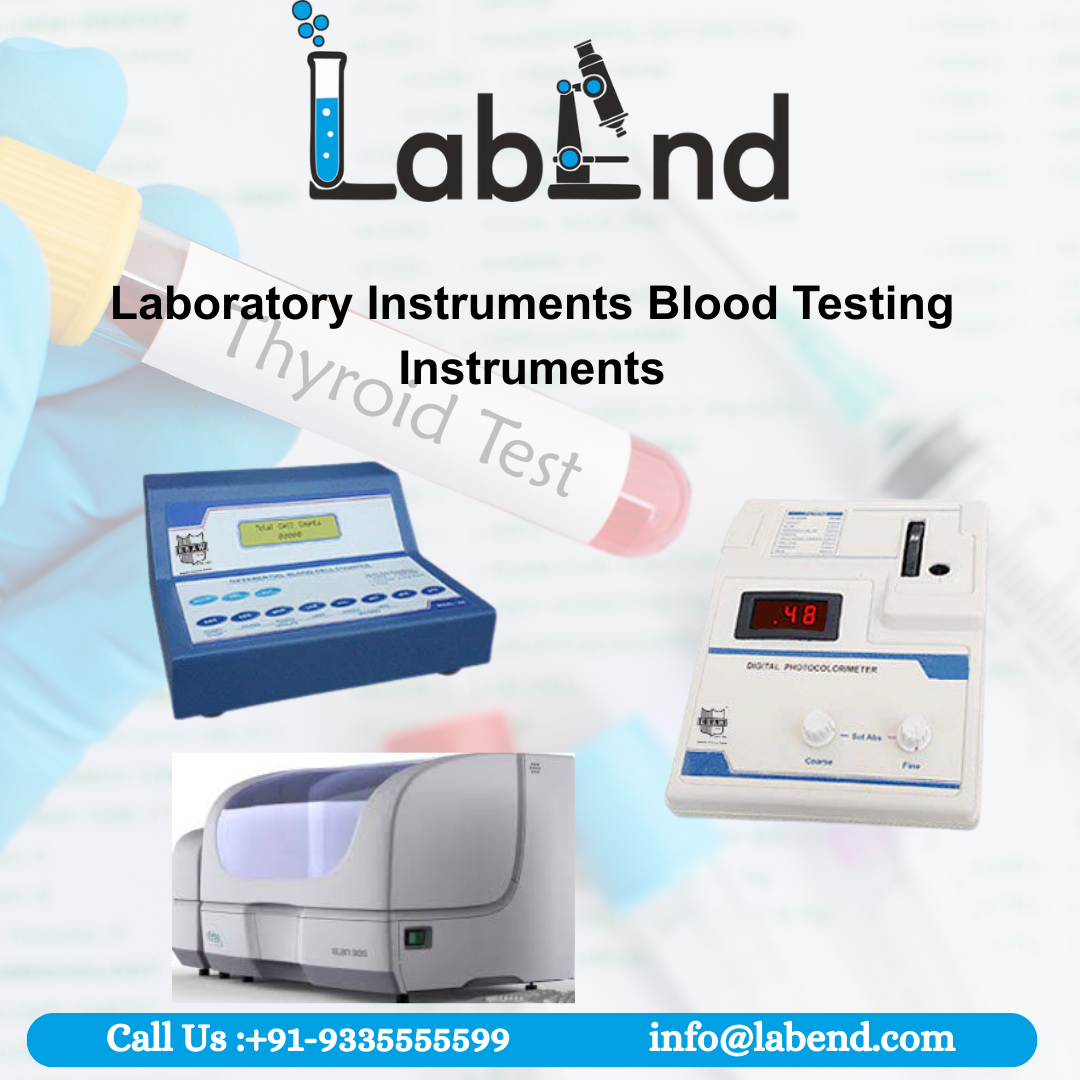
Laboratory Instruments Blood Testing Instruments
The field of medical diagnostics is often described as the compass of healthcare, providing direction to physicians and surgeons. Within this compass, blood analysis is the most vital coordinate. Blood carries the genetic, chemical, and biological markers of our entire system. To decode these markers, high-performance Laboratory Instruments Blood Testing Instruments are indispensable. These sophisticated machines have transformed the way we detect diseases, manage chronic conditions, and ensure the safety of blood transfusions worldwide.
As global health challenges evolve, the demand for faster, more accurate, and automated diagnostic solutions has reached an all-time high. The integration of fluidics, optics, and digital software has allowed even the smallest laboratories to perform complex assays that were once reserved for massive research institutions.
The Technological Architecture of Blood Analysis
Modern blood testing is no longer a manual, labor-intensive process. It is a symphony of mechanical precision and electronic intelligence. When we look at Laboratory Instruments Blood Testing Instruments, we are looking at the pinnacle of biomedical engineering. These instruments are designed to handle delicate biological fluids while maintaining absolute sterile integrity.
The core of these systems lies in their detection methods. Whether using electrical impedance to count cells or spectrophotometry to measure chemical concentrations, the goal remains the same: absolute repeatability. For a lab manager, the reliability of these instruments means fewer reruns, lower costs, and, most importantly, faster treatment for the patient.
Hematology: The Science of Cellular Counting
One of the primary functions of Laboratory Instruments Blood Testing Instruments is hematology—the study of blood cells. A Complete Blood Count (CBC) is the foundational test for almost every medical checkup.
Modern hematology analyzers utilize flow cytometry and laser technology. By passing a single stream of cells through a laser beam, the instrument can measure the size, complexity, and granularity of each cell. This allows for the precise identification of white blood cell subsets, such as neutrophils and lymphocytes. Such detail is crucial for diagnosing everything from simple bacterial infections to complex bone marrow disorders. The transition from 3-part to 5-part and even 7-part differential analyzers has provided clinicians with a depth of data that was unimaginable a few decades ago.
Clinical Chemistry and Metabolic Profiling
While hematology focuses on the cells, clinical chemistry focuses on the fluid—the plasma and serum. This is where Laboratory Instruments Blood Testing Instruments analyze the chemical "messengers" of the body. Metabolic panels, liver function tests, and renal profiles are all conducted on automated chemistry analyzers.
These machines work by mixing blood samples with specific reagents that cause a color change or a fluorescent signal. The intensity of this signal is directly proportional to the concentration of the substance being measured, such as glucose, cholesterol, or creatinine. High-throughput systems can now perform thousands of these tests per hour, making them the workhorses of large diagnostic chains and hospital laboratories.
The Critical Role of Coagulation and Hemostasis
Coagulation testing is another vital pillar. Instruments designed for hemostasis measure how quickly a patient's blood clots. This is life-saving information for patients on anticoagulant therapy (like Warfarin or Heparin) and for those preparing for surgery.
The latest Laboratory Instruments Blood Testing Instruments in the coagulation sector use mechanical and optical methods to detect the formation of a fibrin clot. By automating this process, labs eliminate human error and provide standardized results (such as the INR) that allow doctors to adjust medication dosages with extreme precision.
Immunoassays and Infectious Disease Screening
In the wake of global pandemics and the rising prevalence of chronic viral infections, immunoassay platforms have become central to blood testing. These instruments detect antigens and antibodies in the blood, identifying the presence of viruses like HIV, Hepatitis, or SARS-CoV-2.
Techniques such as ELISA (Enzyme-Linked Immunosorbent Assay) and Chemiluminescence Immunoassay (CLIA) are used to detect these markers at incredibly low concentrations. These Laboratory Instruments Blood Testing Instruments are essential not only for clinical diagnosis but also for the screening of donated blood units in blood banks, ensuring that every transfusion is safe for the recipient.
Automation and the Digital Laboratory
The modern diagnostic landscape is moving toward "Total Laboratory Automation" (TLA). This involves connecting various blood testing instruments via conveyor belts and central software systems. Automation reduces the physical handling of samples, which significantly lowers the risk of biohazardous exposure for lab technicians and minimizes the chance of sample mislabeling.
Furthermore, the integration of Laboratory Information Management Systems (LIMS) allows these instruments to upload results directly to a patient’s electronic health record. This digital bridge ensures that a doctor can view critical blood data within minutes of the test being completed, facilitating rapid decision-making in emergency rooms and intensive care units.
Maintaining Standards: Calibration and Quality Control
Precision is a moving target that requires constant adjustment. Every diagnostic instrument must undergo rigorous daily quality control (QC) and periodic calibration. Using standardized control materials ensures that the instrument's sensors are aligned and its reagents are performing as expected.
High-quality blood testing instruments feature internal monitoring systems that alert the user if a result falls outside the expected range. This "flagging" system is a safety net that prevents inaccurate data from being released, maintaining the lab's reputation and ensuring patient safety.
Conclusion: The Future of Blood Diagnostics
As we look toward the future, the focus is shifting toward "Point-of-Care" (POC) testing—bringing the power of the central lab to the patient's bedside. While large-scale Laboratory Instruments Blood Testing Instruments will always be the gold standard for high-volume analysis, smaller, portable devices are now allowing for rapid blood gas and electrolyte testing in ambulances and remote clinics.
The marriage of Artificial Intelligence with blood diagnostics is the next frontier. AI algorithms are now being trained to recognize abnormal cell patterns and predict disease trends before they become clinically apparent. This proactive approach to medicine, supported by robust and reliable instrumentation, promises a future where diseases are caught in their earliest, most treatable stages. At the end of the day, these instruments are more than just hardware; they are the guardians of public health, turning the complex language of our blood into clear, actionable, and life-saving information.
FAQ
Q1: How do modern blood testing instruments handle "Micro-sampling" for pediatric patients?
Modern analyzers are now engineered with "Low Dead-Volume" (LDV) probes. This technology allows the instrument to aspirate as little as 10 to 20 microliters of blood, making it possible to conduct a full range of tests on infants and elderly patients without the need for large blood draws.
Q2: What is "Smart Reagent Management" in automated analyzers?
Smart Reagent Management uses RFID tags or barcodes on reagent bottles to track stability, volume, and expiration dates in real-time. The instrument automatically calculates how many tests are remaining and alerts the operator before a reagent runs out, preventing unexpected downtime during peak hours.
Q3: Can environmental factors like humidity affect blood testing results?
Yes, humidity and temperature can affect reagent stability and the fluidics of the instrument. High-end blood testing instruments are equipped with internal thermal sensors and climate-controlled chambers to ensure that the chemical reactions occur at a constant 37°C, regardless of the external laboratory environment.



Leave a comment