
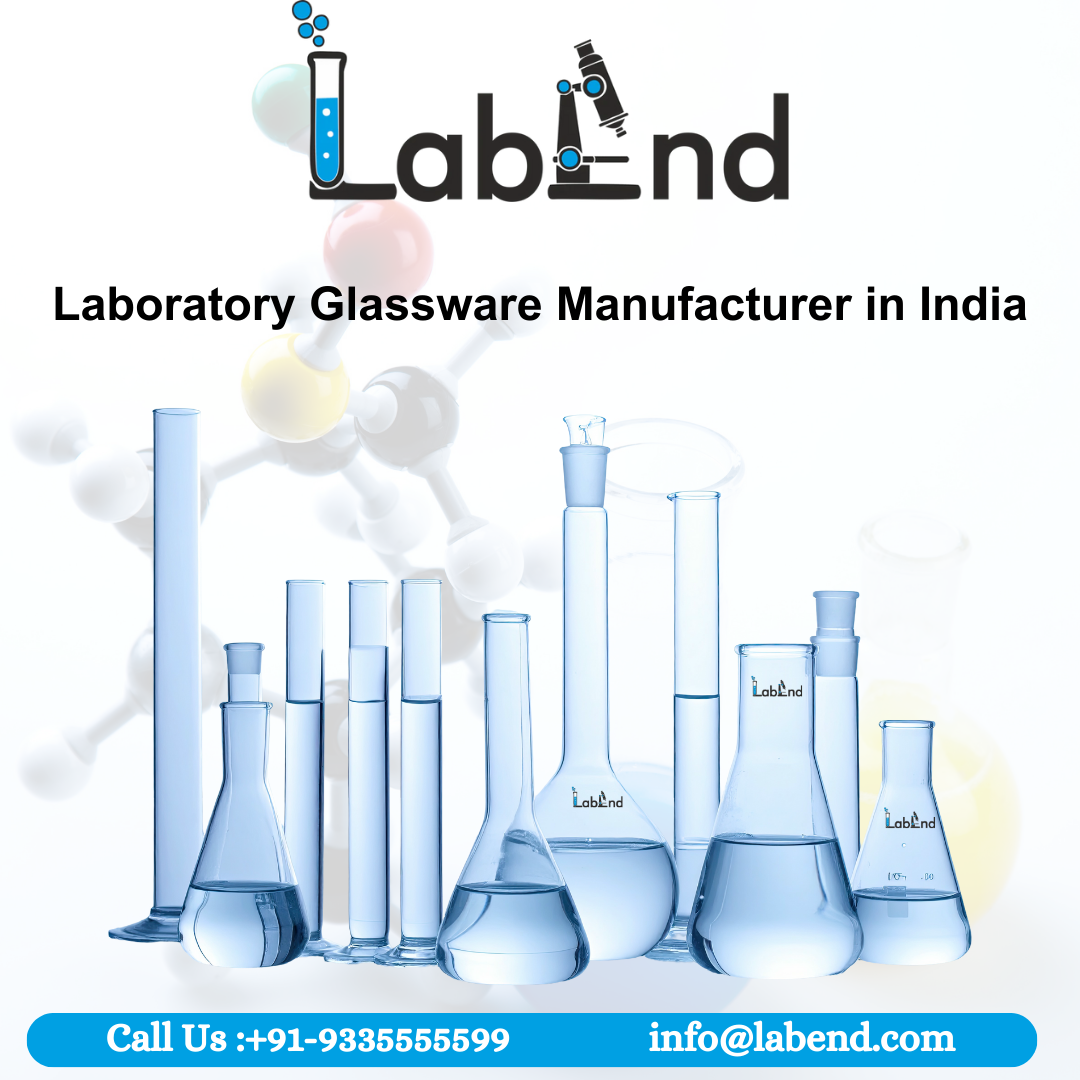
Laboratory Glassware Manufacturer in India : Labend
In the realm of scientific discovery, the vessel that holds the experiment is just as critical as the experiment itself. Precision, thermal resistance, and chemical inertness are the pillars of any successful laboratory workflow. India has long been recognized as a global powerhouse in industrial manufacturing, but it is in the niche of high-grade scientific glass where the country truly shines. As a leading Laboratory Glassware Manufacturer in India, the focus remains on transforming raw silica into high-precision instruments that empower researchers, chemists, and educators worldwide.
Why Quality Glassware is the Foundation of Science
Laboratory glassware is subjected to extreme conditions—rapid temperature shifts, corrosive chemicals, and high-pressure sterilization. Using inferior glass can lead to breakage, sample contamination, or inaccurate volumetric measurements. A top-tier Laboratory Glassware Manufacturer in India utilizes Borosilicate 3.3 glass, a material celebrated for its exceptionally low coefficient of thermal expansion. This ensures that the glass can transition from an ice bath to a high-temperature flame without shattering, providing a safe and reliable environment for sensitive reactions.
The Manufacturing Process: Precision at Every Degree
The journey of a piece of glassware from a furnace to a laboratory bench is one of extreme precision. Modern manufacturing involves several critical stages:
1. Raw Material Selection
The quality of laboratory glass starts with the purity of the sand. By utilizing high-purity silica and boric oxide, manufacturers ensure that the final product is free from impurities that could leach into samples during high-temperature reactions.
2. Machine Blowing vs. Hand Crafting
While mass-produced items like beakers and test tubes are often made using automated blowing machines for uniformity, complex apparatuses such as Soxhlet extractors or Schlenk lines require the steady hand of a master glassblower. This blend of automation and traditional craftsmanship is what defines a versatile Laboratory Glassware Manufacturer in India.
3. Annealing: Stress-Relieving the Glass
One of the most important steps in glass manufacturing is the annealing process. Glass is heated and then cooled very slowly in a controlled oven (lehr) to remove internal stresses. Properly annealed glassware is significantly more durable and less likely to crack during routine lab use.
Essential Categories of Laboratory Glassware
A comprehensive catalog from a reputable manufacturer covers a wide spectrum of scientific needs:
-
Volumetric Glassware: This includes Burettes, Pipettes, and Volumetric Flasks. These must be calibrated to "Class A" standards with NIST-traceable accuracy to ensure that volume measurements are exact.
-
General Labware: Beakers, Erlenmeyer flasks, and reagent bottles form the daily essentials of any lab. Their design focuses on easy pouring and high chemical resistance.
-
Interchangeable Joints: The development of standardized ground-glass joints has revolutionized chemistry by allowing different pieces of equipment (like condensers and boiling flasks) to be connected without the need for rubber bungs or corks.
-
Specialized Apparatus: Custom-built distillation setups, reactors, and filtration units designed for specific pharmaceutical or organic chemistry applications.
Role in the Pharmaceutical and Chemical Sectors
India is often called the "Pharmacy of the World," and this industry relies heavily on high-quality glass. As a dedicated Laboratory Glassware Manufacturer in India, providing USP (United States Pharmacopeia) compliant glassware is essential. Pharmaceutical R&D labs require glassware that does not react with active pharmaceutical ingredients (APIs). Whether it is a simple titration or a complex organic synthesis, the chemical neutrality of borosilicate glass ensures that the molecular integrity of the drug remains uncompromised.
Sustainability and the Shift from Plastic to Glass
In recent years, there has been a significant global shift back toward glass. While plastic labware is convenient, it often carries a high environmental cost and can interfere with results through "leaching" of phthalates. Glass is 100% recyclable and, due to its durability, can be sterilized and reused thousands of times. This makes glass the more sustainable and economically viable choice for modern laboratories committed to "Green Science."
Global Reach and Compliance Standards
The hallmark of a world-class Laboratory Glassware Manufacturer in India is its ability to meet international quality benchmarks. Exporting to the USA, Europe, and Asia requires compliance with ISO 3819 (for beakers), ISO 4788 (for cylinders), and DIN standards. By meeting these rigorous certifications, Indian manufacturers have proven that they can deliver European-level quality at a much more competitive price point.
Caring for Your Glassware: Best Practices
To ensure the longevity of high-precision glass, labs must follow strict maintenance protocols:
-
Cleaning: Use mild detergents and avoid abrasive brushes that can scratch the surface.
-
Sterilization: Always ensure that caps and stopcocks are loosened during autoclaving to prevent pressure buildup.
-
Inspection: Regularly check for "star cracks" or chips, as these small defects can lead to catastrophic failure under heat or vacuum.
Conclusion: Shaping the Future of Research
The laboratory glassware industry in India is no longer just about melting sand; it is about engineering the future of science. By combining advanced material science with artisanal glass-blowing techniques, a Laboratory Glassware Manufacturer in India provides the essential infrastructure for innovation. From high-school chemistry labs to advanced biotech research facilities, the clarity and strength of Indian-made glass continue to be the lens through which we view scientific progress.
Frequently Asked Questions (FAQ)
Q1: What is the difference between Borosilicate 3.3 and Soda-lime glass? Borosilicate 3.3 contains a high percentage of boric oxide, making it resistant to thermal shock and chemical attack. Soda-lime glass is cheaper but cannot withstand high temperatures or sudden temperature changes, making it unsuitable for most laboratory heating applications.
Q2: How do I know if my volumetric glassware is accurate? Look for the "Class A" marking and the calibration temperature (usually 20°C). Reputable manufacturers provide a batch or individual calibration certificate to guarantee the accuracy of the graduations.
Q3: Can lab glassware be customized for specific experiments? Yes, many Indian manufacturers have specialized glass-blowing departments that can create custom reactors, manifolds, and glass setups based on specific technical drawings provided by researchers.
Q4: Is it safe to use scratched glassware? No. Even a minor scratch acts as a stress point. When the glass is heated or placed under a vacuum, the scratch can expand rapidly, causing the vessel to implode or shatter.

Leave a comment