
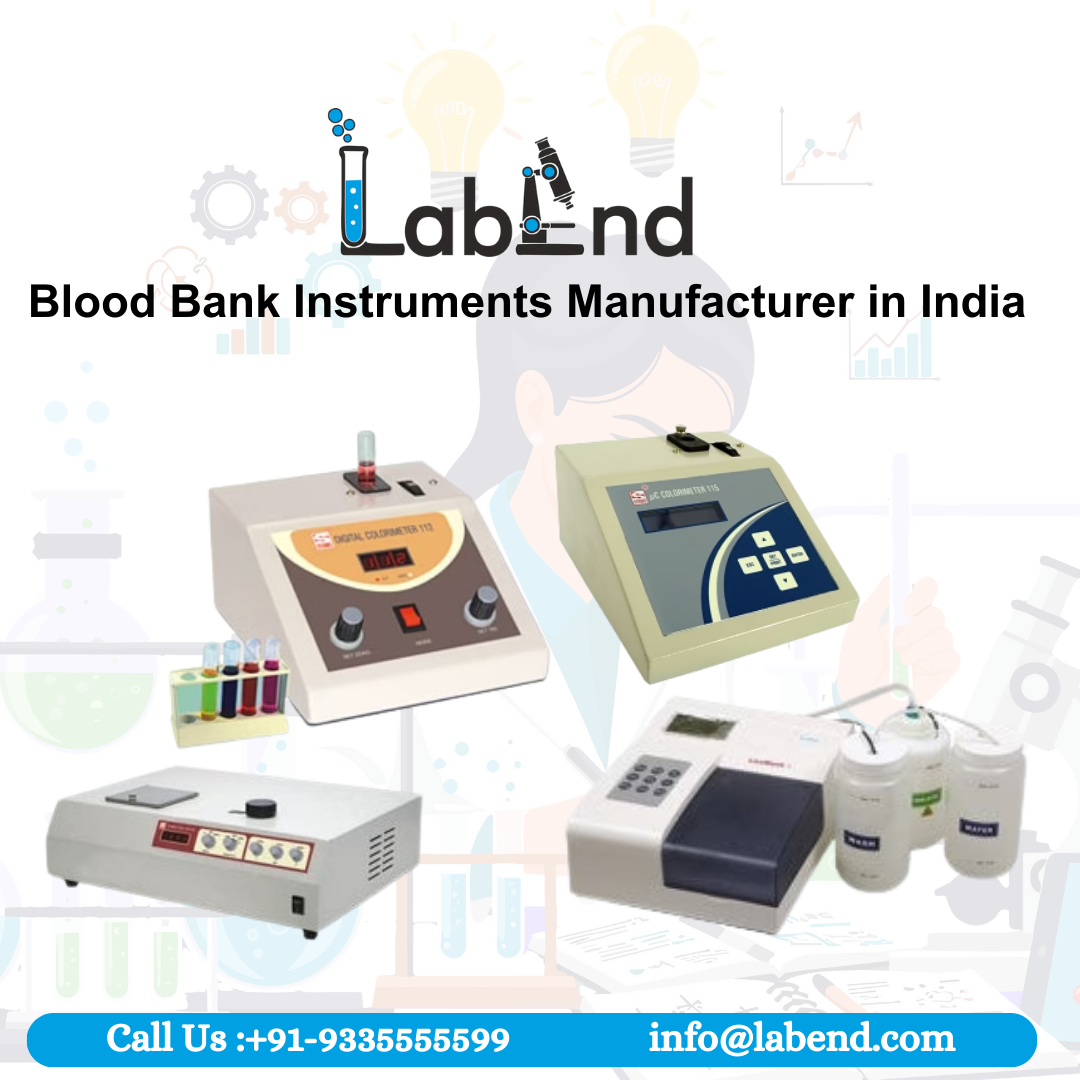
Blood Bank Instruments Manufacturer in India
In the high-stakes environment of medical research and blood transfusion services, "clean" is simply not enough. To ensure patient safety and experimental integrity, the standard is absolute sterility. This is where BLOOD BANK INSTRUMENTS MANUFACTURER IN INDIA become the most critical assets in any facility. Whether it is neutralizing biohazardous waste or preparing surgical tools for a life-saving procedure, the autoclave is the silent sentinel that stands between a successful outcome and a catastrophic infection.
India has witnessed a massive surge in healthcare infrastructure, leading to a demand for sterilization equipment that is not only high-performing but also compliant with international safety protocols. From portable tabletop units to massive horizontal industrial systems, the evolution of autoclave technology is reshaping the landscape of clinical diagnostics and blood storage.
The Science of Steam: How Autoclaves Achieve 100% Sterilization
The fundamental principle of an autoclave is "moist heat" sterilization. While boiling water at $100^{\circ}\text{C}$ can kill many bacteria, it is ineffective against highly resistant microbial spores.
Modern BLOOD BANK INSTRUMENTS MANUFACTURER IN INDIA solve this by using pressurized saturated steam. By increasing the internal pressure to approximately 15 psi (pounds per square inch), the boiling point of water is raised to $121^{\circ}\text{C}$ ($250^{\circ}\text{F}$). At this elevated temperature, steam penetrates deep into the pores of the equipment, denaturing the proteins of all living organisms and rendering them completely inactive. This process typically takes between 15 to 30 minutes, depending on the density of the load.
Essential Types of Autoclaves for Clinical and Research Use
A premier manufacturer of BLOOD BANK INSTRUMENTS MANUFACTURER must offer a variety of configurations to suit different facility sizes:
1. Vertical Autoclaves (Top Loading)
Commonly found in microbiology labs and small clinics, these space-saving units are ideal for sterilizing glassware, culture media, and small instruments. Their top-loading design allows for the efficient handling of tall containers and bulk liquids.
2. Horizontal Autoclaves
Designed for high-volume hospitals and large-scale blood banks, horizontal models offer a much larger chamber capacity. They are often used for sterilizing bulky items like surgical packs, linen, and large batches of diagnostic tools.
3. Class B Autoclaves
For complex, hollow, or porous instruments, a Class B autoclave is the gold standard. It uses a powerful vacuum pump to remove all air from the chamber before injecting steam. This ensures that the steam reaches every internal surface of a hollow tube or a wrapped surgical kit, providing a superior level of sterilization.
The Critical Role of Autoclaves in Blood Bank Operations
In a blood bank, the focus is twofold: maintaining the purity of blood products and the safe disposal of contaminated materials. BLOOD BANK INSTRUMENTS MANUFACTURER are vital for:
-
Sterilizing Reusable Equipment: Ensuring that collection monitors, tray sets, and clamps are free from any pathogens before they interact with a donor.
-
Bio-Waste Management: After blood is tested or processed, any biological waste (such as contaminated swabs, tubes, or expired units) must be autoclaved to prevent the spread of infectious diseases like HIV or Hepatitis into the environment.
-
Component Processing: Maintaining the sterile integrity of the environment where plasma, platelets, and red cells are separated.
Engineering Excellence: Key Features to Look For
When selecting BLOOD BANK INSTRUMENTS MANUFACTURER IN INDIA, certain technical features distinguish a professional-grade unit from a basic model:
-
Microprocessor Control: Modern units feature PLC-based control panels that allow for "one-touch" sterilization cycles, reducing the risk of human error.
-
Triple Safety Protection: This includes a safety valve for overpressure, an automatic door locking mechanism, and a thermal sensor that prevents the door from opening until the temperature drops to a safe level (usually below $80^{\circ}\text{C}$).
-
Stainless Steel Construction: High-grade SS-304 or SS-316 chambers are essential for corrosion resistance, as they are constantly exposed to high-pressure steam and moisture.
-
Water Level Indicators: Integrated sensors that prevent the heating elements from burning out if the water level is too low.
Safety First: Standard Operating Procedures
Operating a high-pressure vessel requires strict adherence to safety protocols. Laboratory personnel should always:
-
Wear Appropriate PPE: Use heat-resistant gloves, lab coats, and face shields when unloading the machine.
-
Avoid Overloading: Ensure there is enough space between items for steam to circulate freely.
-
Loosen Lids: Never autoclave a tightly sealed container; the pressure buildup can cause the glass to explode.
-
Use Autoclave Tape: Always use chemical indicators (tape) that change color when the required temperature is reached, providing a visual confirmation of sterilization.
Why Indian Autoclaves are the Global Choice
Indian manufacturers have mastered the balance between heavy-duty engineering and cost-effectiveness. By following ISO 13485 and CE certification standards, BLOOD BANK INSTRUMENTS MANUFACTURER made in India are now exported to dozens of countries. They are built to be rugged, handling the fluctuating power and high-humidity environments that are common in many parts of the world, while delivering the same precision as more expensive European brands.
Conclusion:
Science and healthcare cannot exist without the certainty of sterilization. BLOOD BANK INSTRUMENTS MANUFACTURER IN INDIA provide that certainty, acting as the final barrier against contamination and infection. By investing in a high-quality, microprocessor-controlled autoclave, a laboratory is not just buying a machine; it is investing in the health of its staff and the accuracy of its results. As technology continues to advance, the integration of digital tracking and energy-efficient systems will ensure that the autoclave remains the most trusted tool in the battle for a sterile world.
Frequently Asked Questions (FAQ)
Q1. Which are the essential blood bank instruments provided by leading manufacturers in India?
Leading Indian manufacturers like Labend provide a comprehensive range of essential equipment, including Blood Bank Refrigerators, Platelet Agitators with Incubators, Blood Collection Monitors, Plasma Expressers, and Refrigerated Centrifuges. These instruments are designed to meet international safety standards (CE/ISO) to ensure the integrity of blood components during storage and processing.
Q2. How do I choose the best blood bank instruments manufacturer in India for my hospital?
To select the right manufacturer, evaluate them based on three critical factors: Compliance, Technology and After-Sales Support. Reliable manufacturers in India offer extensive warranty periods and pan-India service networks to minimize downtime for critical life-saving equipment.
Q3. Why is temperature monitoring crucial in blood bank equipment manufacturer in India?
Blood components are highly temperature-sensitive. Indian manufacturers integrate advanced alarm systems and digital thermal recorders in instruments like Blood Bag Storage Cabinets and Deep Freezers. These features provide real-time alerts for temperature fluctuations, ensuring that life-saving blood products remain viable and safe for transfusion as per WHO guidelines.



Leave a comment