


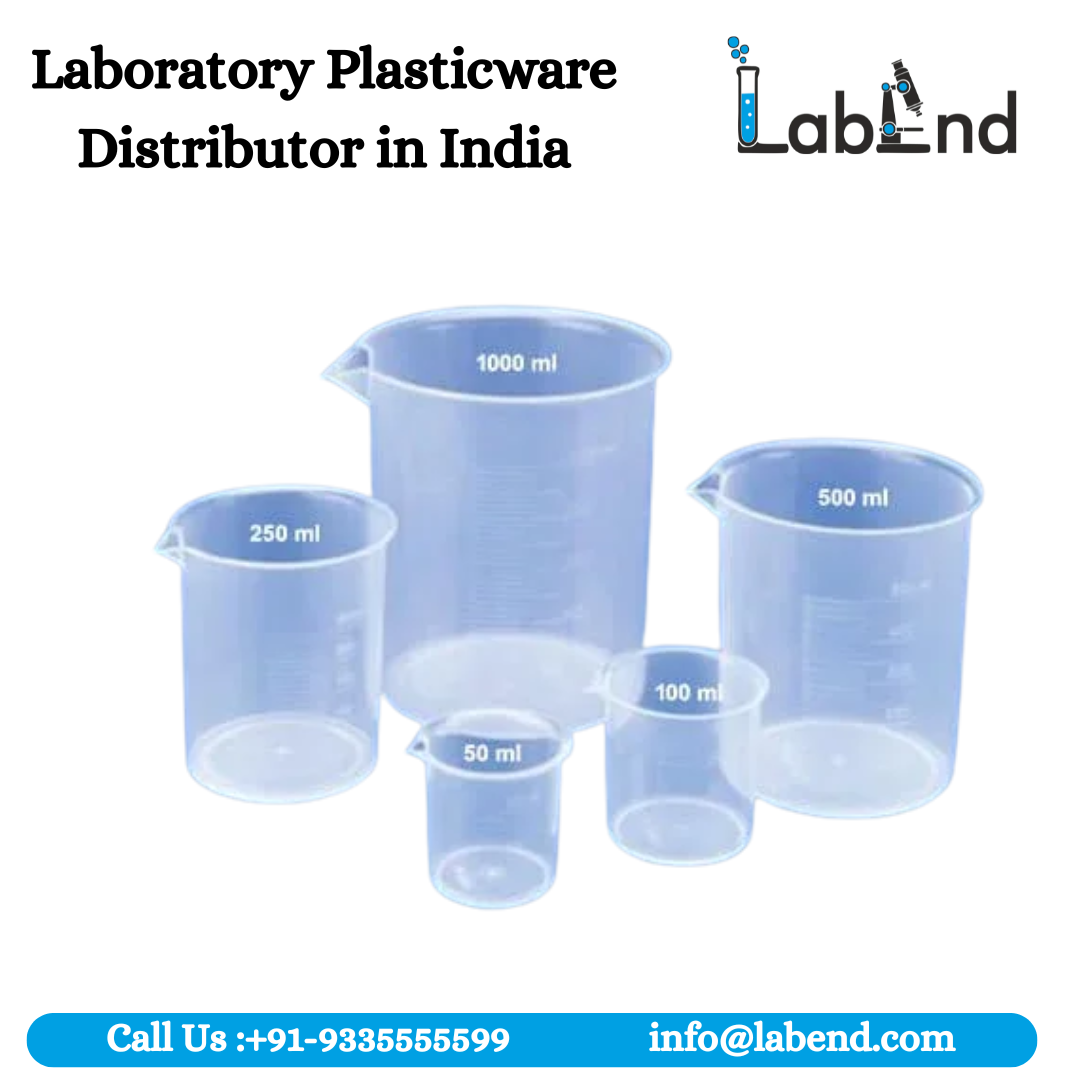
Laboratory Plasticware Distributor in India Labend
The modern laboratory ecosystem of 2026 has witnessed a massive shift in infrastructure design. While scientific glassware remains crucial for specific high-thermal applications, high-performance polymers have redefined everyday fluid handling, sample processing, and cryogenic storage. The rise of sensitive analytical techniques like Next-Generation Sequencing (NGS), high-performance liquid chromatography (HPLC), and micro-volume diagnostics has turned laboratory consumables into critical components of data accuracy.
In this high-precision environment, choosing a Laboratory Plasticware Distributor in India is no longer just a routine purchasing decision. It is a critical step in quality control that directly impacts cell culture viability, sample contamination risks, and experimental reproducibility. Labend provides this comprehensive informational analysis to guide laboratory managers, research scholars, and procurement teams through the technical realities of modern scientific plastics.
1. Resin Purity: The Battle Against Extractables and Leachables (L&E)
The most significant, hidden risk in modern biological and chemical research is sample contamination caused by the container itself. When plasticware comes into contact with organic solvents, strong acids, or even aqueous buffers, microscopic chemical compounds can migrate from the plastic matrix into the sample.
Understanding the Contaminants:
-
Extractables: Compounds that can be forced out of a plastic material under extreme conditions, such as high heat or aggressive solvent exposure.
-
Leachables: Compounds that naturally migrate from the plastic into a sample under normal laboratory storage or experimental conditions.
These chemical impurities—which often include slip agents, plasticizers, biocides, and heavy metal catalysts used during manufacturing—can inhibit enzyme activity, distort UV-vis spectrophotometric readings, and produce ghost peaks in mass spectrometry.
As a leading Laboratory Plasticware Distributor in India, Labend emphasizes sourcing items manufactured from virgin, medical-grade resins without recycled additives or heavy mold-release agents. Ensuring your distributor provides lot-certified, ultra-pure plasticware is the first line of defense against corrupted experimental data.
2. Advanced Material Profiles: Matching Resins to Protocols
A truly expert distribution partner must offer deep technical guidance on the physical limitations and chemical affinities of different plastic types. Choosing the wrong polymer can lead to container deformation, sample loss, or physical hazards.
A. Fluoropolymers (PFA, FEP, and PTFE)
When experiments demand the absolute highest level of chemical inertness and thermal stability, fluoropolymers are the ultimate choice.
-
Performance: Capable of withstanding extreme temperatures ranging from $-200^\circ\text{C}$ to $+260^\circ\text{C}$.
-
Chemical Profile: Completely inert to virtually all chemicals, including hydrofluoric acid, concentrated nitric acid, and aggressive organic solvents.
-
Application: Ideal for ultra-trace element analysis, environmental testing, and cryogenic storage of precious biological materials.
B. Polyallomer (PA)
Polyallomer is a specialized linear copolymer combining ethylene and propylene, engineered specifically for high-stress mechanical environments.
-
Performance: Offers exceptional impact strength and structural flexibility.
-
Application: It is the standard material for high-speed ultracentrifuge tubes, as it resists stress-cracking under intense G-forces without catastrophic failure.
C. Polyethylene Terephthalate (PET) & PETG
These polymers are highly valued in modern life science labs for their outstanding gas-barrier properties and crystal-clear visibility.
-
Performance: They minimize gas permeability, protecting sensitive media and buffers from pH shifts caused by atmospheric carbon dioxide.
-
Application: Widely used for media bottles, storage carboys, and specialized tissue culture vessels.
3. Critical Selection Criteria for Institutional Procurement
Procurement managers looking for a reliable Laboratory Plasticware Distributor in India must evaluate suppliers against rigorous operational benchmarks rather than focusing solely on unit price.
Surface Treatment Technologies
For advanced cell and tissue culture workflows, the internal surface of the plasticware is critical. Untreated polystyrene is naturally hydrophobic, which prevents anchorage-dependent cells from attaching and growing. Top-tier distributors supply plates and flasks that have undergone vacuum-gas plasma treatment, turning the surface hydrophilic and allowing for uniform cell attachment and monolayer development.
Dimensional Accuracy and Automation Compatibility
In 2026, automation, liquid-handling robotics, and multi-channel pipetting systems are standard across large diagnostic and industrial labs. If deep-well plates or pipette tips suffer from even minor dimensional variances during molding, automated pick-and-place arms will jam, causing expensive downtime. A reliable distributor ensures that all structural plasticware strictly adheres to SLAS/ANSI microplate standards for flawless robotic integration.
Sterility Assurance Levels (SAL)
For molecular biology, forensics, and clinical diagnostics, plasticware must be free of biological contaminants. Sourcing must guarantee a Sterility Assurance Level (SAL) of $10^{-6}$, confirming that the probability of a viable microorganism surviving on the product is less than one in a million. Additionally, consumables must be lot-certified free of:
-
DNase & RNase: To prevent the degradation of fragile DNA/RNA samples during PCR.
-
Endotoxins & Pyrogens: To ensure cell culture health and valid diagnostic results.
4. Operational Ergonomics and Eco-Friendly Lab Practices
Modern polymer engineering doesn't just focus on chemical purity; it also prioritizes user safety and environmental sustainability.
Ergonomic Advantages:
Premium laboratory plasticware features high-contrast, permanent molded graduations that remain readable even after repeated autoclaving cycles. Features like extra-wide pouring spouts on cylinders and frosted writing patches on microcentrifuge tubes greatly improve daily workflow efficiency and prevent labeling errors.
The Sustainability Movement in 2026:
The modern scientific community is actively working to reduce its plastic footprint. As a forward-thinking Laboratory Plasticware Distributor in India, Labend encourages the use of high-durability, reusable polypropylene carboys, cylinders, and eco-friendly packaging systems. By selecting highly durable, reusable plastics that can withstand repeated sterilization cycles without losing accuracy, labs can dramatically lower both their carbon footprint and their long-term waste disposal costs.
5. Conclusion: Securing Your Scientific Supply Chain
Every definitive discovery, clinical diagnosis, and regulatory approval depends entirely on the reliability of the vessel holding the sample. The clarity of your results is directly linked to the purity and structural integrity of your laboratory consumables. Partnering with a specialized, quality-focused supplier ensures that your research infrastructure meets global technical benchmarks.
Laboratory Plasticware Distributor in India Labend remains dedicated to supporting this scientific foundation across India. By bridging the gap between advanced polymer engineering and the daily needs of modern research facilities, we provide the material consistency that allows your team to focus on what matters most: discovery.
Consult with Our Technical Infrastructure Specialists
Align your laboratory's material standards with global best practices. Reach out to the Labend technical support team today for detailed product specifications, bulk procurement quotes, or custom material compatibility consultations.


Leave a comment