

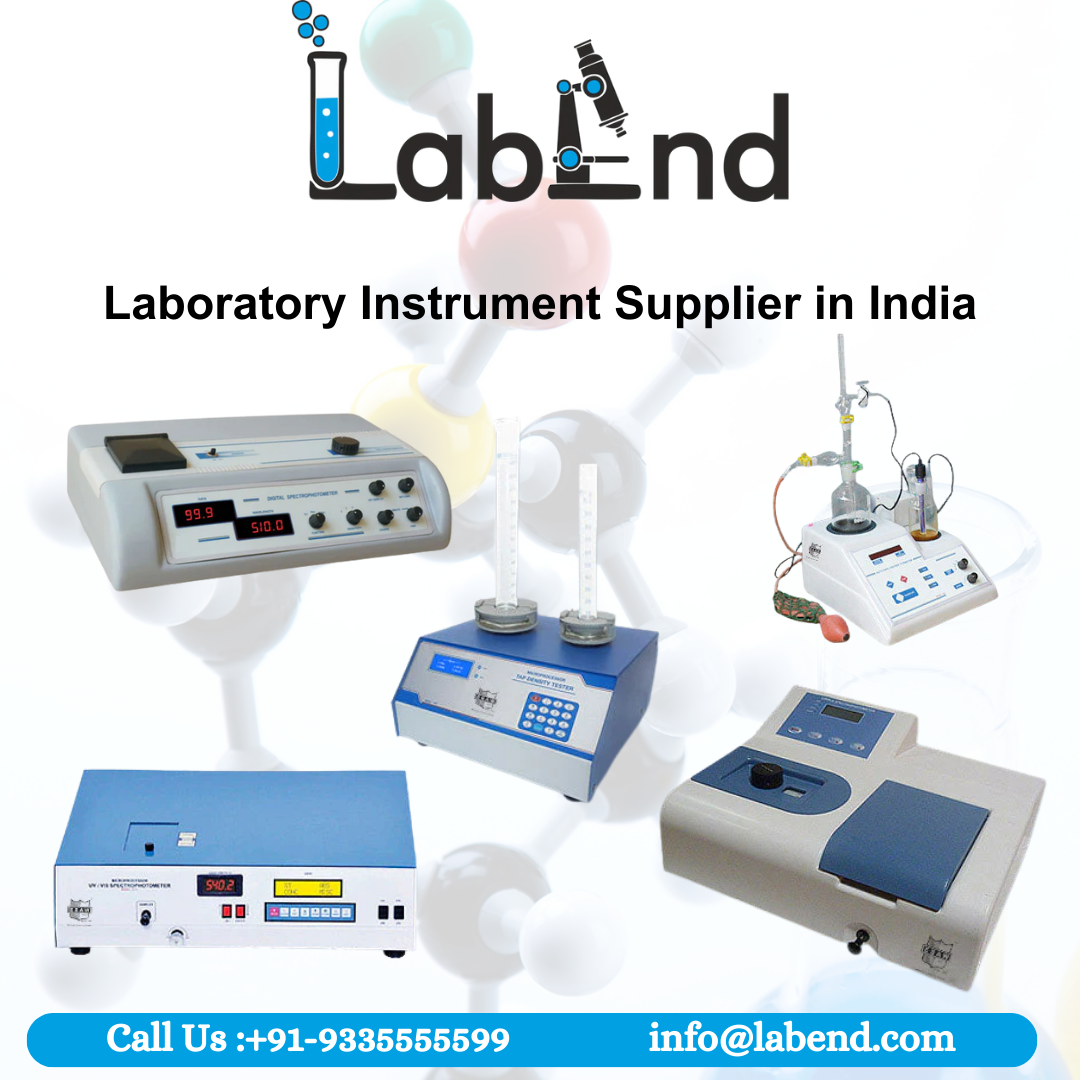
Laboratory Instrument Supplier in India : Labend
The landscape of Indian science and technology is witnessing a monumental shift. As the nation positions itself as a global leader in pharmaceuticals, biotechnology, and material sciences, the infrastructure supporting these innovations must be world-class. Behind every groundbreaking discovery and every validated quality control report stands a dedicated Laboratory Instrument Supplier in India. These partners are the backbone of modern research, providing the precision tools necessary to turn a hypothesis into a reality.
The Strategic Importance of Quality Instrumentation
In the world of scientific inquiry, your results are only as good as the instruments you use. Whether you are conducting complex chemical titrations, isolating DNA strands, or ensuring the safety of a new life-saving drug, accuracy is non-negotiable. A premier Laboratory Instrument Supplier in India does more than just move boxes; they provide the assurance of repeatability and reliability.
The Indian market is unique. Unlike European or North American labs, Indian facilities often deal with specific environmental challenges, including fluctuating power grids and varying humidity levels. Consequently, the instruments supplied must be rugged, high-performing, and backed by robust after-sales support. This makes the choice of a supplier a critical strategic decision for any lab manager or research head.
The Digital Revolution in Stirring and Heating
One of the most essential categories in any facility is the stirring and heating section. We have moved far beyond the days of simple analog knobs. Modern laboratories now demand digital precision. High-torque magnetic stirrers and advanced stirring hotplates, such as the Thermo Scientific™ SuperNuova+™ or the IKA C-Mag series, have redefined expectations.
These instruments feature microprocessor-controlled feedback systems that maintain a constant speed and temperature, even as the viscosity of the liquid changes. As a top-tier Laboratory Instrument Supplier in India, the focus has shifted toward offering "smart" instruments that feature integrated timers, programmable ramp rates, and safety "Hot Top" indicators to prevent laboratory accidents.
Advancements in Sample Homogenization
For biological and forensic laboratories, tissue homogenization is a critical first step. The efficiency of a homogenizer directly impacts the yield of proteins or nucleic acids. Leading suppliers now offer high-speed digital homogenizers that utilize specialized stainless steel or Teflon pestles. These devices provide the shearing force required to break down tough fibrous tissues without denaturing the sensitive biological molecules within. This level of specialization is what differentiates a general trader from a specialized Laboratory Instrument Supplier in India.
Ensuring Integrity in Blood Banking and Cold Chain
The healthcare sector in India, particularly blood banking, requires a level of precision where there is zero margin for error. Storing blood components like platelets, plasma, and whole blood requires strictly monitored environments. Instruments such as refrigerated centrifuges, platelet agitators with built-in incubators, and ultra-low temperature freezers are vital.
The integrity of the cold chain is paramount. Suppliers must ensure that every refrigerator and freezer is equipped with advanced alarm systems and digital data loggers. In a country where the ambient temperature can soar above 45°C, the thermal insulation and compressor efficiency of these instruments are what save lives daily.
Why Localization and Service Support are Key
The primary reason why research institutions prefer a local Laboratory Instrument Supplier in India over direct international imports is the necessity of "Uptime." A high-end centrifuge or a spectrophotometer is a significant investment. If a minor sensor fails, waiting weeks for a part to arrive from overseas can stall an entire research project.
An established Indian supplier maintains a local inventory of spare parts and a team of factory-trained service engineers. They offer Annual Maintenance Contracts (AMC) and IQ/OQ/PQ (Installation, Operation, and Performance Qualification) documentation, which is essential for labs aiming for NABL or FDA accreditation. This localized ecosystem ensures that the scientific workflow remains uninterrupted.
Sustainability and the Green Lab Movement
A new trend emerging in the Indian scientific community is the "Green Lab" initiative. Researchers are looking for instruments that are energy-efficient and built with eco-friendly materials. Modern laboratory instruments are now designed to consume less power while delivering higher output. For instance, brushless DC motors in stirrers not only last longer but also consume significantly less electricity and run cooler, reducing the load on the lab's air conditioning system.
The Role of Technology in Compliance
With the increasing scrutiny from global regulatory bodies, compliance has become a central theme. Laboratory instruments now come with USB ports or RS232 interfaces to allow for direct data logging. This eliminates manual entry errors and provides a clear audit trail. Whether it is a pH meter or a precision balance, the ability to export data directly to a LIMS (Laboratory Information Management System) is a feature that every modern lab in India is now requesting.
Looking Ahead: The Future of Indian Labs
As we look toward 2030, the integration of Artificial Intelligence (AI) and the Internet of Things (IoT) in laboratory instrumentation is inevitable. We are already seeing "Connected Labs" where a researcher can monitor the temperature of a long-term reaction or the status of a deep freezer from a smartphone. The role of the supplier will evolve from a hardware provider to a digital solutions architect, helping labs integrate these complex systems into a seamless, automated workflow.
Conclusion
In conclusion, the path to global scientific leadership for India is paved with precision and quality. The equipment within a lab is the silent partner in every successful experiment. By choosing a reputable and technologically advanced Laboratory Instrument Supplier in India, institutions can ensure that their research stands up to international scrutiny. Investing in high-quality stirring hotplates, homogenizers, and cold-chain equipment is not just a capital expenditure; it is an investment in the accuracy of the data that will drive the next generation of Indian innovation. When quality meets local expertise, the possibilities for scientific breakthrough are limitless.
Frequently Asked Questions (FAQs)
1. How does an Indian supplier help with NABL accreditation for a new lab?
A professional supplier provides instruments that are already compliant with international standards like CE and ISO. More importantly, they provide NABL-traceable calibration certificates and help with the IQ/OQ/PQ documentation. This ensures that when the auditors arrive, every instrument in your lab has a documented history of accuracy and performance.
2. Is it better to buy multi-brand equipment from one supplier or deal with multiple manufacturers?
Dealing with a single, consolidated supplier is often more efficient. It simplifies the procurement process, reduces shipping costs, and most importantly, provides a single point of contact for service. A specialized supplier understands how different instruments from different brands (like Remi, IKA, and Thermo) interact within a lab environment and can offer a more cohesive solution.
3. What is the typical lifespan of high-end stirring and heating instruments in India? With proper maintenance and a stable power supply, high-quality instruments from reputable brands can easily last 8 to 12 years. To maximize this lifespan, it is recommended to opt for Annual Maintenance Contracts (AMC) from your supplier, which includes regular cleaning, sensor check-ups, and motor lubrication to prevent premature wear and tear.



Leave a comment